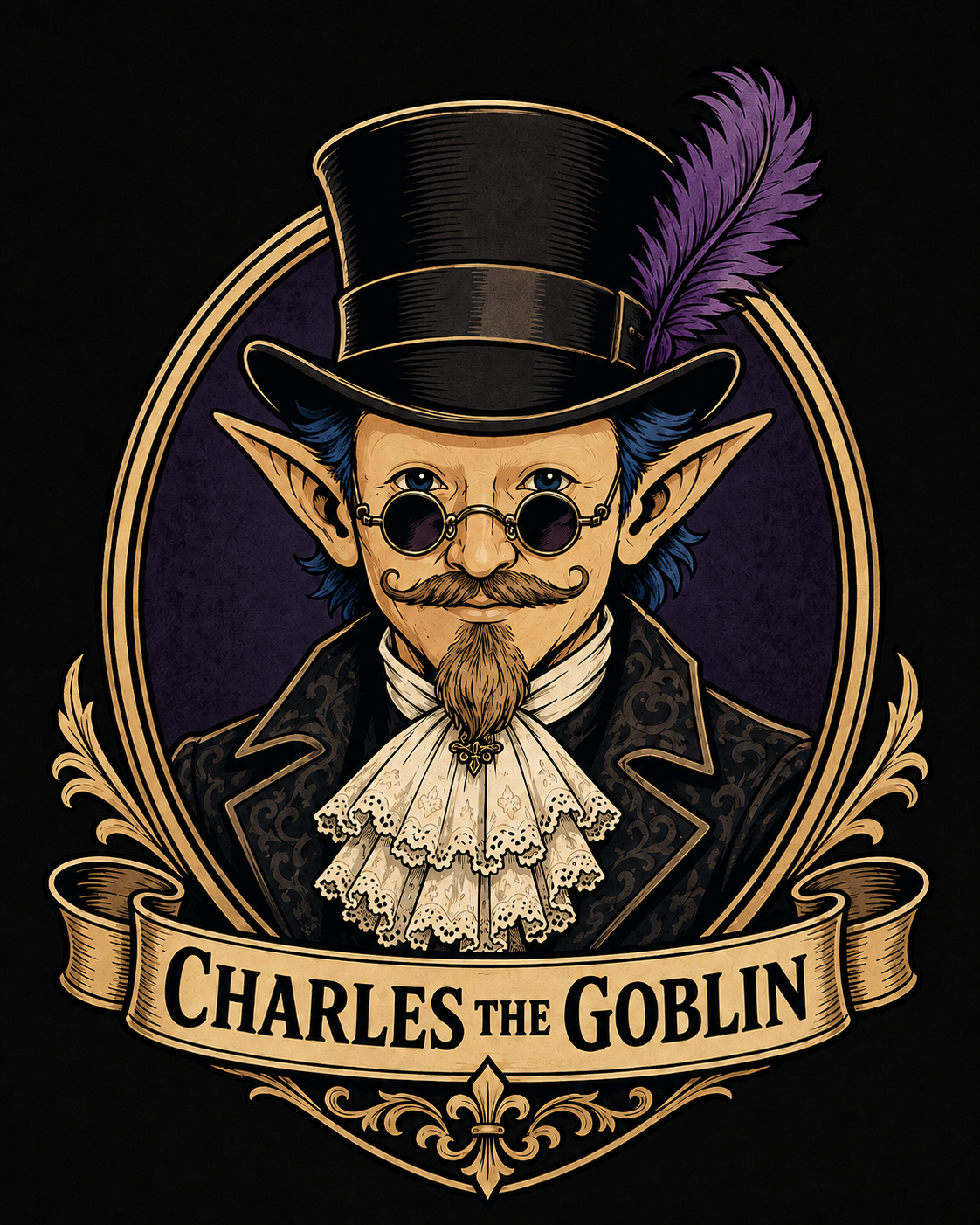
Book 02 - Chapter Seven:

Early morning.
Nothing unusual.
If anyone noticed the fur, the tail, the way her feet hit the ground bare and sure, their brains obligingly filled in the blanks.
Fur tracksuit, some part of them decided.
Costume, said another.
Good for them, concluded the rest.
No one stared.
No one called out.
No one reached for a phone.
Olivia’s breath stayed even as she ran, shoulders loose, arms swinging naturally. Greymuzzle’s presence echoed in the set of her spine, the way she kept her head up and her awareness wide without straining for it.
See without hunting.
Move without fleeing.
She let her pace carry her past storefronts and side streets, the scents of the morning layering themselves into something rich and readable—baked bread from somewhere nearby, old oil and metal, damp earth where the night’s cold still lingered in shadow.
Her hunger was there, steady and patient, no longer a distraction. Just information ticking along in the back of her mind.
She smiled, just a little, as she passed a café with its lights coming on—caught her reflection briefly in the glass and didn’t break stride.
To anyone watching, she was just another person out for a jog.
And for once, that was close enough to the truth to be useful.
She kept running.
The rhythm stayed easy and unforced, breath steady, stride consistent. She lifted a hand now and then, waving to someone watering a lawn, nodding to a woman unlocking her car. A jogger going the opposite direction gave her a quick thumbs-up. Olivia returned it with a grin and didn’t slow.
Dogs announced her passage before their owners ever noticed.
A bark here—sharp, territorial.
Another there—deep, booming.
Then the shift.
As Olivia’s gaze flicked briefly toward one fenced yard, the barking stuttered. One dog backed away from the chain link, hackles up, eyes wide. Another dropped low and quiet, tail tucked, watching her with an intensity that had nothing to do with joggers.
She didn’t bare teeth. Didn’t change pace. Just looked.
Big dog rules applied whether anyone acknowledged them or not.
She passed, and the barking didn’t resume.
High Street came up gradually, the architecture changing without fanfare. Fewer houses, but larger, with wide yards and more brick.
She covered a couple of blocks, paws drumming lightly against asphalt, tail swinging with the motion—
Whoop whoop.
The sound cut cleanly through the morning.
Olivia’s ears twitched before her brain caught up.
Whoop whoop.
She glanced back.
Red and blue lights flashed in her peripheral vision, reflected in a shop window before she saw the source directly.
A police car, rolling slow behind her.
Olivia slowed, then stopped.
Not abruptly—just easing out of her stride until she was standing on the sidewalk, tail swaying once before settling. She wasn’t even breathing hard. Her heart rate ticked down obediently, as if she’d only just started warming up.
Behind her, the police car rolled to a stop.
The driver’s door opened, and the officer stepped out.
He was older, broad-shouldered despite the soft roundness at his middle, with a shock of gray hair escaping from beneath his hat. The resemblance was uncanny—like Alan Hale had decided, in another life, to trade the Skipper for a badge and a quieter town.
Sheriff Buckley.
He shut the door with a solid, unhurried motion and started toward her. Not wary. Not aggressive. But his right hand stayed comfortably close to the revolver at his hip—not gripping it, just… aware of where it was. Habit, not fear.
A good man.
A careful one.
“Morning,” he called as he approached, voice calm and curious rather than sharp. His eyes flicked over her once—taking in the fur, the tail, the bare paws on pavement—then back to her face.
“Got a call about a wild animal runnin’ through town,” he said, almost apologetically. “And well… you’re the closest match I’ve got so far.”
He stopped a respectful distance away, tipped his head slightly, and smiled.
“You aren’t wild, are you, young lady?”
A beat.
“Not an animal… mostly… either, are you?”
There was no malice in it. Just honest assessment, delivered by someone who’d learned long ago that the world was wider than it looked—and that pretending otherwise got people hurt.
Olivia smiled back, relaxed, tail giving a small, friendly wag.
“No, sir,” she said easily. “I’m Olivia. I live at the Station—OtherWorlds Media. With Mister Winthrop and Miss LaDonna.”
The change was immediate.
Buckley’s shoulders eased. His hand drifted a fraction farther from the holster. Recognition lit his eyes, followed by something warm and approving.
“Well hell,” he said, the tension draining clean out of him. “You should’ve said so.”
He chuckled, shaking his head. “Charles Winthrop and Miss LaDonna are some of the best people this town’s got. Lost track of how many times they’ve stepped in when folks needed help—quiet-like, no fuss.”
He looked at her again, this time with unmistakable fondness. “If you’re one of theirs, then you’re good people too. Practically family, far as I’m concerned.”
He glanced back toward his cruiser, then at the road stretching away behind her.
“You know you’re about twelve miles from the Station, right?”
Olivia blinked.
“…I am?”
She looked back the way she’d come, then forward again, ears slowly angling back in disbelief.
“I left less than half an hour ago.”
Buckley barked a laugh. “Well, you sure weren’t sightseein’.”
He tipped his head toward the car. “Tell you what—how about a ride back? Save me the trouble of explainin’ to dispatch that the ‘wild animal’ waved at me and went on her merry way.”
Olivia hesitated for exactly half a second.
“…Can I roll the window down,” she asked carefully, “and play with the siren?”
Buckley paused.
Then grinned.
“Long as you don’t hit the button more than once,” he said. “Climb in.”
And somewhere, faint and amused, the Station’s hum seemed to approve.
Sheriff Buckley really was a good man.
He let Olivia hit the siren button once.
Then again.
Then—after she’d leaned halfway out the window, tongue lolling happily as she snuffled the rushing air, tail thumping against the seatbelt—he sighed theatrically and said, “Ah, hell with it,” and nudged the accelerator a little harder.
The park looped by in a wash of green and sunlight.
Once around.
Then twice.
Olivia braced her elbows on the window frame, panting, nose full of cut grass and pond water and distant picnics yet to come. The world felt big and right in a way it rarely did. When Buckley finally eased the cruiser back toward the Station, she sat back in her seat, pleasantly spent, ears loose, grin unmistakable.
They rolled into the parking lot at a dignified crawl.
Olivia waited exactly two seconds before pressing the siren button one more time.
WHOOP WHOOP.
“Announcin’ your arrival, are we?” Buckley chuckled as he parked.
She laughed, a little sheepish. “Couldn’t waste the opportunity.”
Then she noticed them.
Charles and Miss LaDonna stood on the sidewalk near the doors, side by side. Not smiling—but not unhappy, either. Watchful. Calm. Present.
Olivia’s tail slowed.
She wasn’t sure why her stomach fluttered. She’d done nothing wrong. Nothing reckless. Nothing she hadn’t needed.
The car doors opened. Buckley stepped out first, straightening his hat, and Olivia followed, stretching once before padding up beside him.
“Well,” the Sheriff said cheerfully as they approached, “caught your stray. Figured I’d better bring her home before she got any ideas about runnin’ all the way to the county line.”
Charles laughed openly. “Much obliged, Sheriff.”
Miss LaDonna smiled warmly as Buckley took her hand, removed his hat, and brushed his lips lightly over her knuckles with old-fashioned courtesy.
“Always a pleasure,” he said.
“The pleasure’s ours,” she replied, genuinely.
Buckley turned his attention back to Olivia, appraising her again—this time with unmistakable approval. “You’ve got very good pacing, young lady. Sleek lines. Excellent breath control.” He shook his head in quiet admiration. “Twelve miles in under half an hour, and not even winded.”
Olivia’s ears perked. Her tail betrayed her immediately, wagging hard enough to sway her hips.
“Well,” Buckley went on, smiling broadly now, “if you ever get interested in police work, you’d ace the physical in a heartbeat.”
Her grin went wide. “Yes, sir!”
Charles cleared his throat lightly, eyes dancing. “Sheriff, since we’re the reason you were up early on a perfectly good Sunday… might we entice you inside for breakfast?”
Buckley didn’t hesitate. “Wouldn’t dream of sayin’ no.”
They headed inside together, the doors closing softly behind them. The breakroom was quiet now—no Hosts, no overlapping conversations. Just sunlight through the windows and the comforting smells of a late-morning spread.
Charles busied himself with plates. Miss LaDonna poured tea. Buckley settled into a chair with a satisfied sigh.
Olivia hovered for a moment—then realized something important.
No one was worried.
No one was disappointed.
No one was about to lecture her.
She took a seat, tail curling comfortably around the leg of the chair, feeling… claimed, in the gentlest possible way.
Home, brought back with a siren.
Breakfast wound down the way good breakfasts always did—slowly, comfortably, with no one in a hurry to be anywhere else.
Olivia had surprised herself by circling back to the buffet and fixing a bowl of oatmeal after all, thick and steaming, with a breakfast sandwich balanced on the edge of the plate. It wasn’t the meat she’d wanted earlier, not really—but it sat right, warm and grounding after the run. She ate steadily, appetite honest and uncomplicated, tail relaxed behind her chair.
Sheriff Buckley leaned back at the end of the table, belly full, hands folded over it in satisfaction.
“Well,” he said, standing at last, “that hit the spot. Much obliged.”
“The pleasure was ours,” Miss LaDonna said warmly, rising to see him out.
Charles walked him to the door, clasping his hand with genuine affection. “Thank you again, Sheriff. For the ride. And the patience.”
Buckley waved it off. “Any time. Always happy to return good folks to where they belong.”
He tipped his hat to Olivia. “You take care now, you hear?”
“Yes, sir,” she said brightly.
The doors closed behind him, the Station settling back into its familiar, companionable quiet.
For a beat, no one spoke.
Then Charles turned slowly toward Olivia, folding his hands on the table, expression carefully composed.
“Young lady,” he said, with mock gravity, “care to explain yourself?”
There it was.
Olivia’s shoulders tensed reflexively. Her ears dipped. She drew in a breath, already assembling an apology.
“I’m sor—”
Before the word could finish forming, Miss LaDonna slid another breakfast sandwich onto Olivia’s plate.
Firmly.
“Stop scaring the poor girl,” Miss LaDonna said, without even looking at Charles. “You know as well as I do this was bound to happen. Better, even—since I know you read about it.”
Olivia blinked, startled, then looked down at the sandwich. Then back up.
Charles stared at Miss LaDonna for half a second—
—and then laughed.
Not politely. Not mildly. He leaned back in his chair and laughed outright, one hand coming up to cover his mouth as he shook his head.
“Guilty,” he admitted. “Entirely guilty.”
He exhaled, the performance dropping away, and looked at Olivia with open warmth instead of pretense.
“My apologies,” he said. “I couldn’t help myself. Sheriff Buckley is one hundred percent Mundane, but he’s got a heart of gold. Thirty-five years wearing that badge. When he finally hangs it up, this town is going to feel the loss.”
Olivia nodded, chewing thoughtfully. “He’s… really nice.”
“He is,” Charles agreed. Then, gently: “All that aside, though…”
He leaned forward just slightly.
“How are you feeling?”
Olivia paused.
Not to search for the right answer—just to check.
She noticed the pleasant heaviness in her limbs. The way her breath still came easily. The quiet, steady hum inside her chest that wasn’t urgency or hunger or anticipation—just contentment.
She smiled, small but genuine.
“…Good,” she said. “Really good. Settled. Tired in a nice way.”
Miss LaDonna nodded, satisfied.
Charles’s eyes softened. “Good,” he echoed.
Olivia hesitated, spoon hovering over her oatmeal.
“There’s… something I thought about while I was running,” she said carefully. “I have an Audience with Queen Mab in a few days. I should probably prepare for that.” She glanced between them. “What can you tell me? What are the rules? Is it like the fairy tales—don’t eat or drink anything, don’t give them your name, all that?”
For a heartbeat, Charles just stared at her.
Then Miss LaDonna made a small, strangled sound.
And then they both lost it.
Not polite laughter. Not restrained amusement. Charles bent forward, one hand braced on the table, shoulders shaking. Miss LaDonna laughed until she had to sit down again, one hand over her mouth, eyes bright with mirth.
Olivia froze, utterly bewildered.
“…I thought you said the old fairy tales had truth in them,” she said weakly.
“They do,” Charles managed, wiping at his eyes. “Oh, they absolutely do.”
“That’s the problem,” Miss LaDonna added, still smiling. “They’re trying to describe something far more complicated than ‘don’t eat the biscuit.’”
Olivia’s ears tilted sideways. “So… I shouldn’t—?”
Charles held up a hand, still chuckling. “We will talk about this properly. I promise. But not here.”
He stood, smoothing his coat, the laughter settling into something warmer and more serious. “This is one of those conversations that benefits from softer light, better chairs, and a bit of privacy.”
Miss LaDonna rose as well, already calm again, amusement lingering at the corners of her eyes. “And fewer witnesses,” she added gently.
Olivia nodded, a little dazed, and slid out of her chair.
The three of them stepped into the hallway together.
Across from them, waiting as it always did, was the door to Charles’ office.
Closed.
Unassuming.
And about to be opened.
They settled in as if the room itself had been waiting for them.
Charles took his place behind the desk, tea steaming gently within reach. Olivia sat in the guest chair opposite him, tail curled neatly along one side, posture attentive without being stiff. Miss LaDonna claimed the couch the way only she could—graceful, unhurried, perfectly at ease, one arm draped along the back as if the furniture had been designed around her silhouette.
Charles was still smiling when he folded his hands atop the desk.
“Etiquette in the Courts,” he began, “is a very tricky thing for anyone to navigate. Even for those born there.”
Olivia nodded, ears forward.
“But,” he continued, “a few simple tips, and you’ll do just fine. You won’t be seeing any of the general populace, and it is the Winter Court, so no one will be trying any obvious tricks.”
Olivia felt her shoulders loosen at that.
Charles waited exactly long enough for the relief to settle.
“Which,” he added mildly, “makes it more important to keep your wits about you—since the tricks will be better hidden, and far more permanent.”
Her ears flicked.
Miss LaDonna smiled faintly, eyes half-lidded.
Charles leaned back slightly. “Now. The fairy tales.”
He lifted one finger. “They are not wrong. They are… compressed. Passed through too many mouths, too many languages, too many frightened parents trying to keep children alive.”
He ticked off the first rule.
“Don’t eat or drink anything in Faerie.”
Olivia nodded. “Because it binds you there?”
Charles tilted his head. “Close. It binds you to the host.”
He leaned forward again. “Food in the Courts is not poison. It’s not a trap. It is hospitality. Accepting it means accepting relationship—reciprocity, obligation, expectation. In Summer, that can be suffocating. In Winter…” He smiled thinly. “It can be contractual.”
Miss LaDonna added calmly, “You may eat if you are invited to eat. You may drink if you are invited to drink. What you do not do is accept casual offerings.”
Charles nodded. “If Queen Mab offers you tea, you accept it. If a servant casually sets a cup in front of you without instruction, you wait.”
Olivia absorbed that, nodding slowly.
“Next,” Charles said, “don’t give them your name.”
“That one’s true,” Miss LaDonna said simply.
Charles raised a finger again. “But not in the way the stories imply. Giving your true name is not dangerous because it’s secret. It’s dangerous because it’s meaningful. Names in the Courts are not labels. They are anchors.”
He looked at Olivia steadily. “No one will ask you for your true name. Not directly. That would be gauche.”
Miss LaDonna’s smile sharpened slightly. “They may ask who you are. Or how you define yourself. Or what you answer to.”
Charles nodded. “You give the name you use. Olivia. That is sufficient. It is yours by choice, and that matters.”
Olivia exhaled softly.
“Another rule,” Charles continued, “don’t thank the Fair Folk.”
“That one always sounded rude,” Olivia admitted.
“And that,” Charles said, pleased, “is because it’s misunderstood. Gratitude implies a debt. In the Courts, debts are currency. You do not thank someone for fulfilling their role.”
Miss LaDonna added, “You may acknowledge effort. You may acknowledge courtesy. You do not frame it as something you now owe repayment for.”
Charles smiled. “Winter, especially, respects precision.”
He paused, studying Olivia—not assessing, but measuring readiness.
“The most important rule,” he said gently, “is the one no fairy tale ever gets right.”
Olivia leaned forward.
“Do not try to be clever,” Charles said. “Be honest. Carefully, deliberately honest.”
Miss LaDonna nodded. “The Courts punish deception less harshly than self-betrayal.”
Charles finished quietly, “Queen Mab already knows what you are. What she will be watching for is whether you do.”
The room fell into a thoughtful silence.
Olivia sat very still.
“…Okay,” she said at last. “That actually helps.”
Charles smiled again—this time with unmistakable pride.
Charles leaned back slightly, fingers steepled, the lecture easing into something more conversational.
“Now,” he said, “there are… minor points of etiquette. Nothing dangerous. Nothing that will bind you or cost you anything. But they do tend to earn goodwill—especially if any sprites or brownies happen to be in attendance.”
Olivia’s ears twitched. “Brownies?”
Miss LaDonna smiled serenely. “They notice everything.”
Charles nodded. “Third-person honorifics are the most common. Any time you are speaking of the Queen—either Queen—to someone else, while in or near either Court, you use her full honorific.”
He lifted a hand slightly, as if reciting from habit.
“For example: Queen Mab, may she reign forever in ice and snow.”
He glanced at Olivia. “See the honorific?”
Miss LaDonna chimed in smoothly, clearly enjoying herself.
“It doesn’t have to be those exact words, either. In fact, they prefer variety.” She tilted her head, considering. “Queen Mab, may she eternally be surrounded by Winter’s embrace.”
Olivia blinked.
Then frowned, thoughtful rather than resistant.
“…Doesn’t that get tiring after a while?” she asked. “And, I mean—no offense—but it feels kind of… narcissistic.”
For half a second, Charles looked genuinely shocked.
Then he laughed.
Not loudly—more like someone caught delightfully off guard.
“Oh, not when you’ve grown up in and around the Courts,” he said. “Having it drilled into you constantly. For the Fae and Fae-adjacent, it becomes automatic. You don’t think about it any more than you think about saying ‘please’ or ‘thank you.’”
He gestured lightly toward Olivia. “For others—such as yourself—it’s not necessary. But it is considered the epitome of polite conversation.”
Miss LaDonna added gently, “Think of it as linguistic courtesy rather than flattery.”
Charles nodded. “As for the narcissism…” He smiled, a little wry. “She knows when anyone uses an honorific in her name. Same as Titania.”
He paused just long enough to make the omission noticeable.
“Note,” he said lightly, “that I did not use her title. So no honorific.”
Olivia caught that immediately, eyes narrowing just a touch.
“And,” Charles continued, as if this were merely an amusing footnote, “if you do it consistently—and sincerely—Queen Mab is liable to be much, much more agreeable toward you.”
Miss LaDonna’s smile deepened, knowing and unreadable.
Olivia nodded slowly, filing it away. “So it’s… not required. But appreciated.”
“Precisely,” Charles said.
What he did not say—what he did not even hint at—was that every honorific spoken in a Queen’s name fed the Courts themselves. That every such phrase nudged power, ever so slightly, toward Winter or Summer. That it made Boons easier to grant. Requests lighter to bear.
That knowledge could wait.
For now, Olivia just leaned back in her chair, tail flicking once, thoughtful but not intimidated.
“…Okay,” she said. “I can do polite.”
Charles smiled, entirely satisfied.